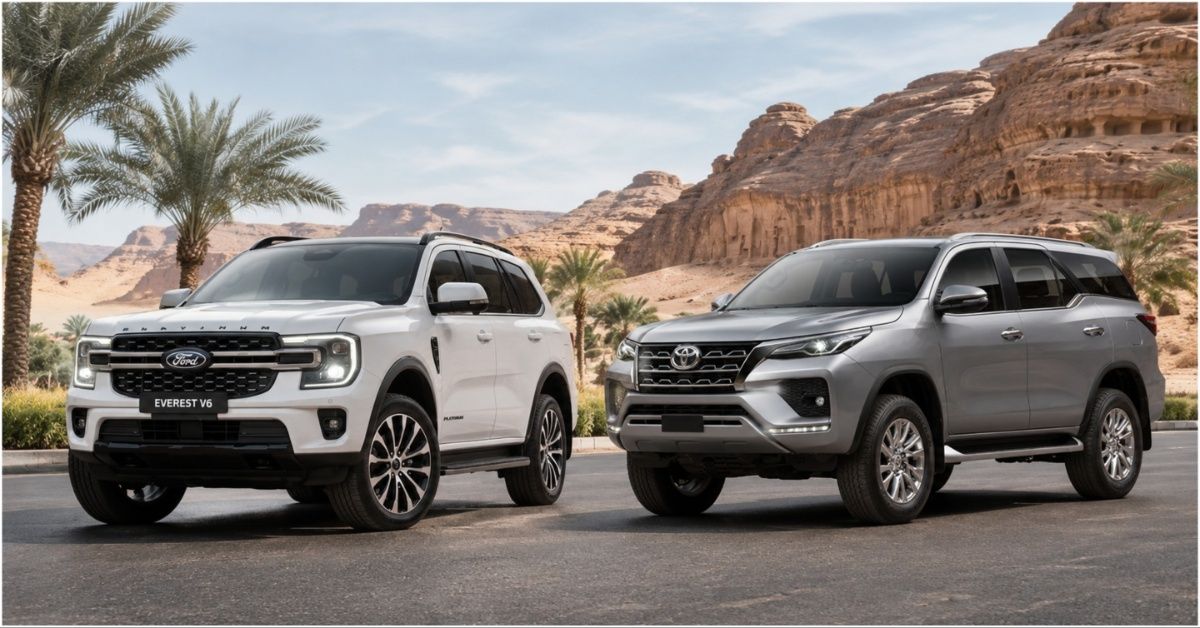
Ford Everest and Toyota Fortuner: The Ultimate Saudi SUV Showdown
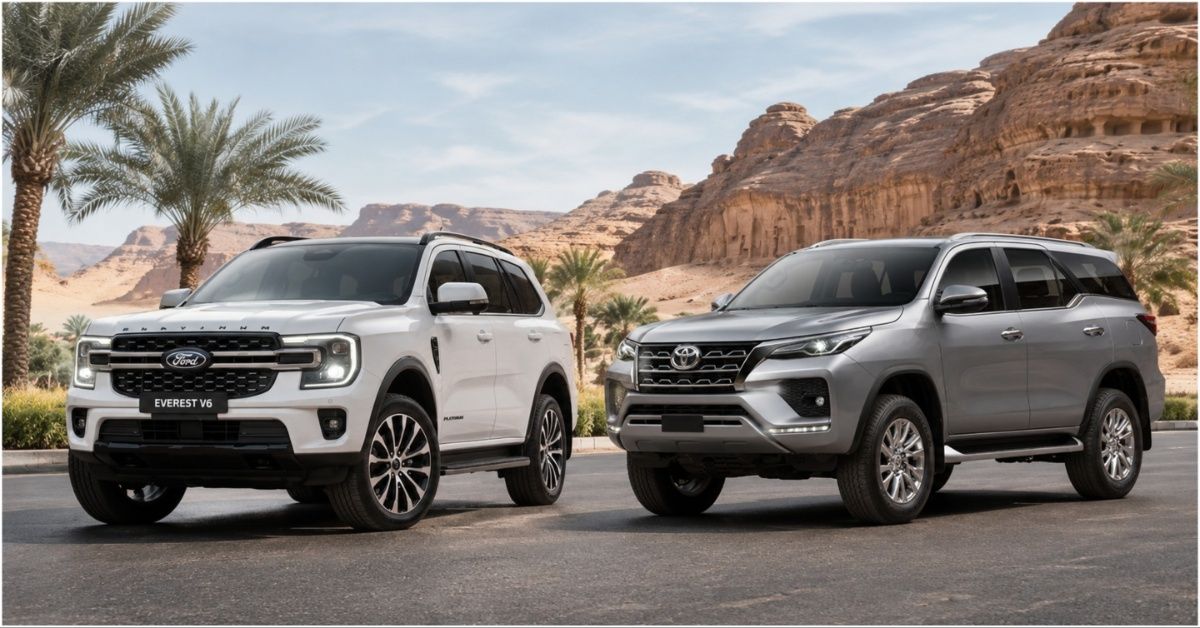
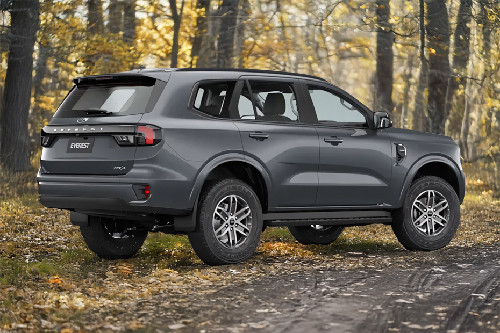
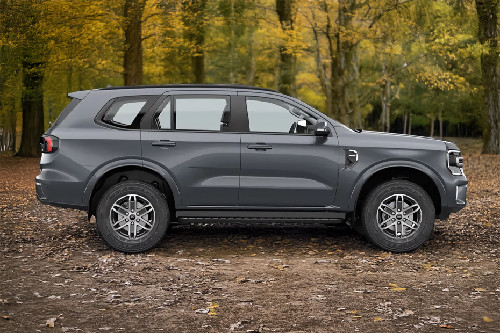
Saudi Arabia: Ford's turbocharged Everest enters the Kingdom's seven-seater segment, taking on the established Toyota Fortuner with modern power against proven flexibility.
KEY TAKEAWAYS
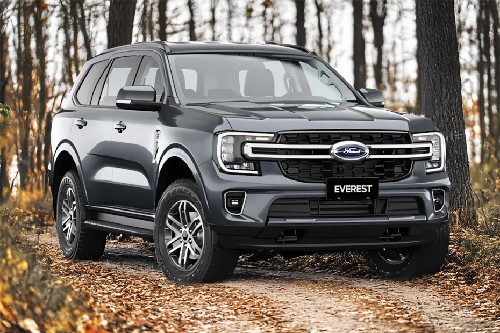
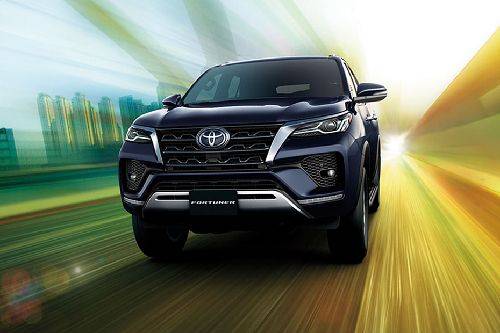
How do the Ford Everest and Toyota Fortuner compare in Saudi Arabia?
The Ford Everest enters Saudi Arabia's seven-seater SUV segment with a 310 hp 2.7L V6 turbo petrol engine and modern screen-focused technology, while the Toyota Fortuner offers four petrol and diesel engine options at a lower starting price.What are the starting prices and engine outputs for the Ford Everest and Toyota Fortuner?
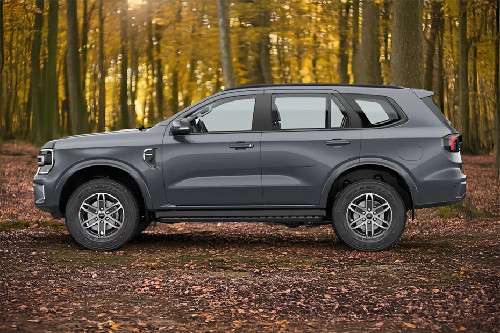
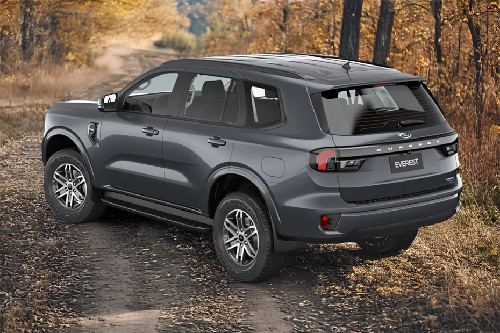
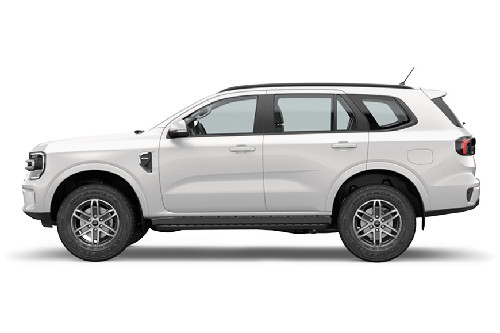
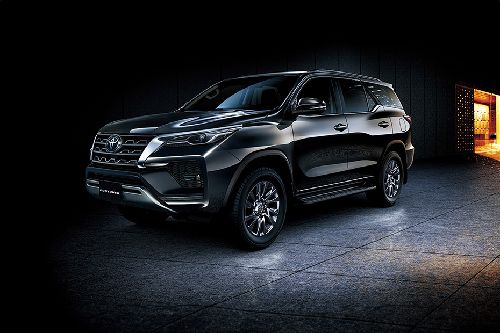
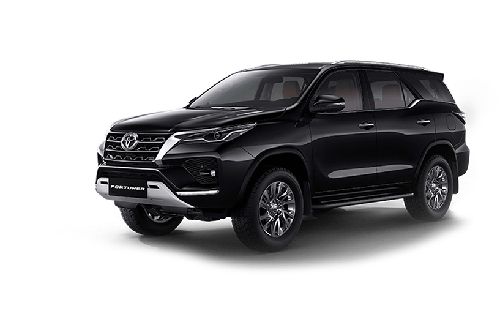
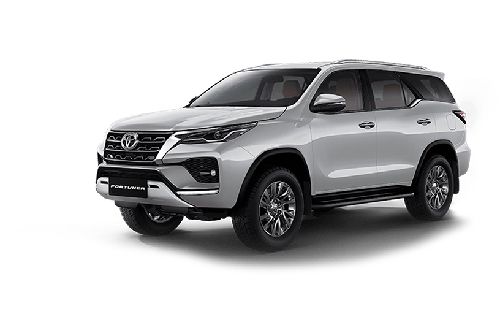
The Ford Everest starts at SAR 167,785 with up to 310 hp and 542 Nm of torque, whereas the Toyota Fortuner starts at SAR 128,742.50 and produces up to 235 hp and 500 Nm of torque.Ford has entered the body-on-frame, seven-seater SUV segment with the Everest. It goes up against the Toyota Fortuner, a market staple, and the two cars force a direct choice: Ford's high-output turbocharged petrol against Toyota's broader spread of petrol and diesel options. For Saudi families and off-road enthusiasts, the trade-off comes down to power, technology, and price.
Quick read:
- Ford's 2.7L V6 turbo petrol puts out up to 310 hp and 542 Nm.
- Toyota's Fortuner has four engine options: a 4.0L V6, two diesels, with output topping at 235 hp.
- Everest starts at SAR 167,785; the Fortuner opens at SAR 128,742.50.
- Ford brings more power and modern tech; Toyota counters with engine variety and lower starting prices.
Engine Power: Turbocharged vs Flexible Fuel Choice
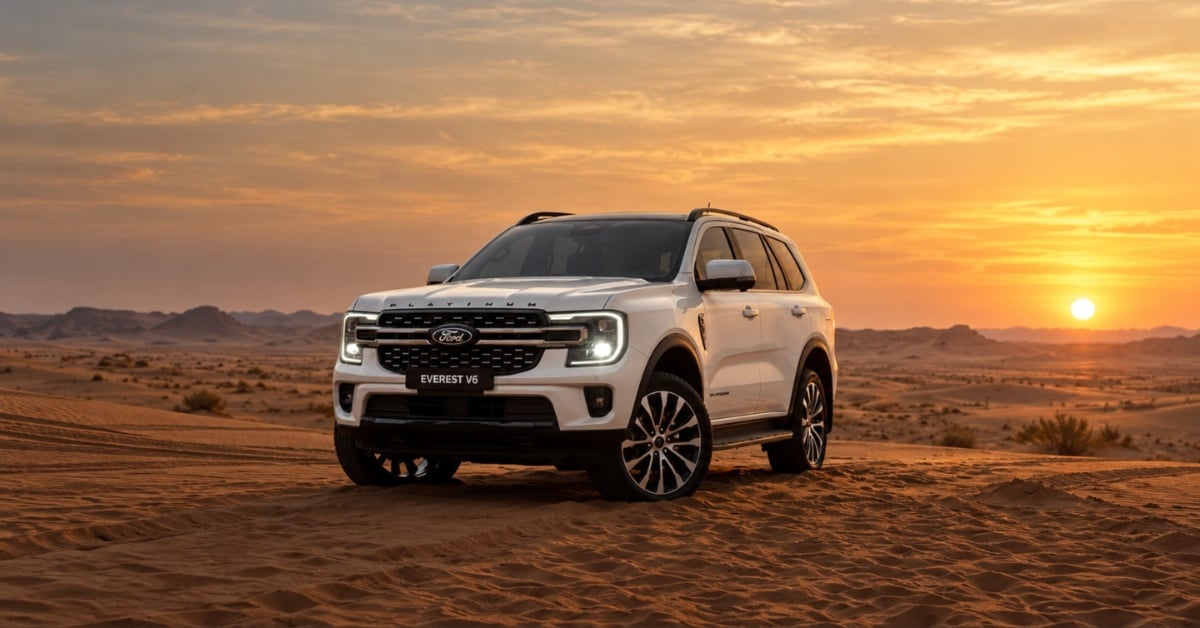
Engine and Performance Comparison
|
Specification |
||
|
Most powerful engine |
2.7L V6 EcoBoost petrol |
4.0L V6 petrol |
|
Maximum Power |
Up to 310 hp |
Up to 235 hp |
|
Maximum Torque |
542 Nm |
Up to 500 Nm, from the 2.8L diesel. |
|
Transmission |
10-speed automatic |
Automatic transmission (varies by engine) |
|
Petrol Engine Options |
2.7L V6 EcoBoost |
2.7L petrol and 4.0L V6 petrol |
|
Diesel Engine Options |
Varies by market specification |
Diesel options span 2.4L and 2.8L. |
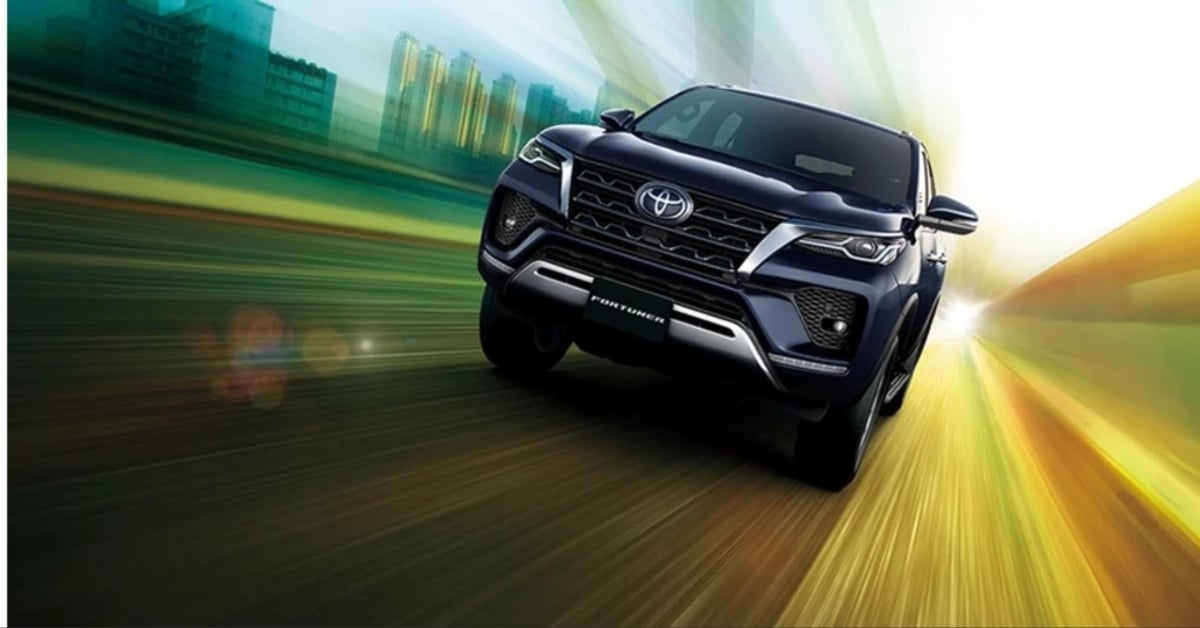
Performance Verdict: On outright power, the Ford Everest has the advantage — its 310 hp V6 is 75 hp clear of the Fortuner's 4.0L petrol, and that gap is real on a highway overtake. If you've been weighing up the two on paper, that number is the one that settles the engine argument. The Toyota Fortuner has more engine choices, including diesel options with strong torque for everyday driving. The 75 hp deficit is a lot to ask the Fortuner's 4.0L V6 to explain away.
Off-Road Credentials and Desert Suitability
Off-Road Capability Comparison
|
Feature |
Ford Everest |
Toyota Fortuner |
|
Terrain Modes |
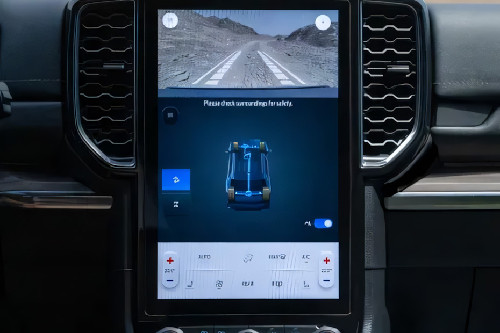
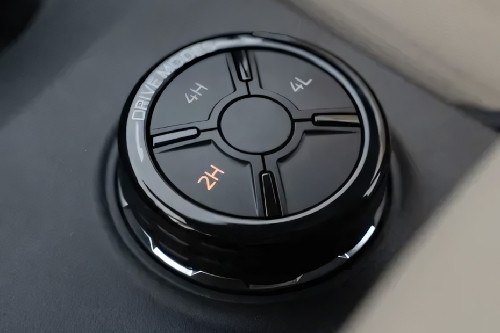
Multiple selectable terrain modes |
Traditional off-road driving setup |
|
Sand Mode |
Available for driving on sand and desert dunes |
No dedicated Sand Mode is listed. |
|
Rock Crawl Mode |
Higher trims like Tremor get it as standard. |
Not specified |
|
4WD System |
Selectable 4WD system |
Selected grades get part-time 4WD. |
|
Low-Range Gear |
Available |
High/low range transfer case |
|
Rear Differential Lock |
Depends on variant |
Selected grades get a mechanical rear differential lock. |
|
Suspension |
Tremor gets specialised off-road suspension. |
Conventional off-road suspension setup |
|
Off-Road Approach |
Electronic terrain management is the focus. |
Traditional mechanical off-road capability |
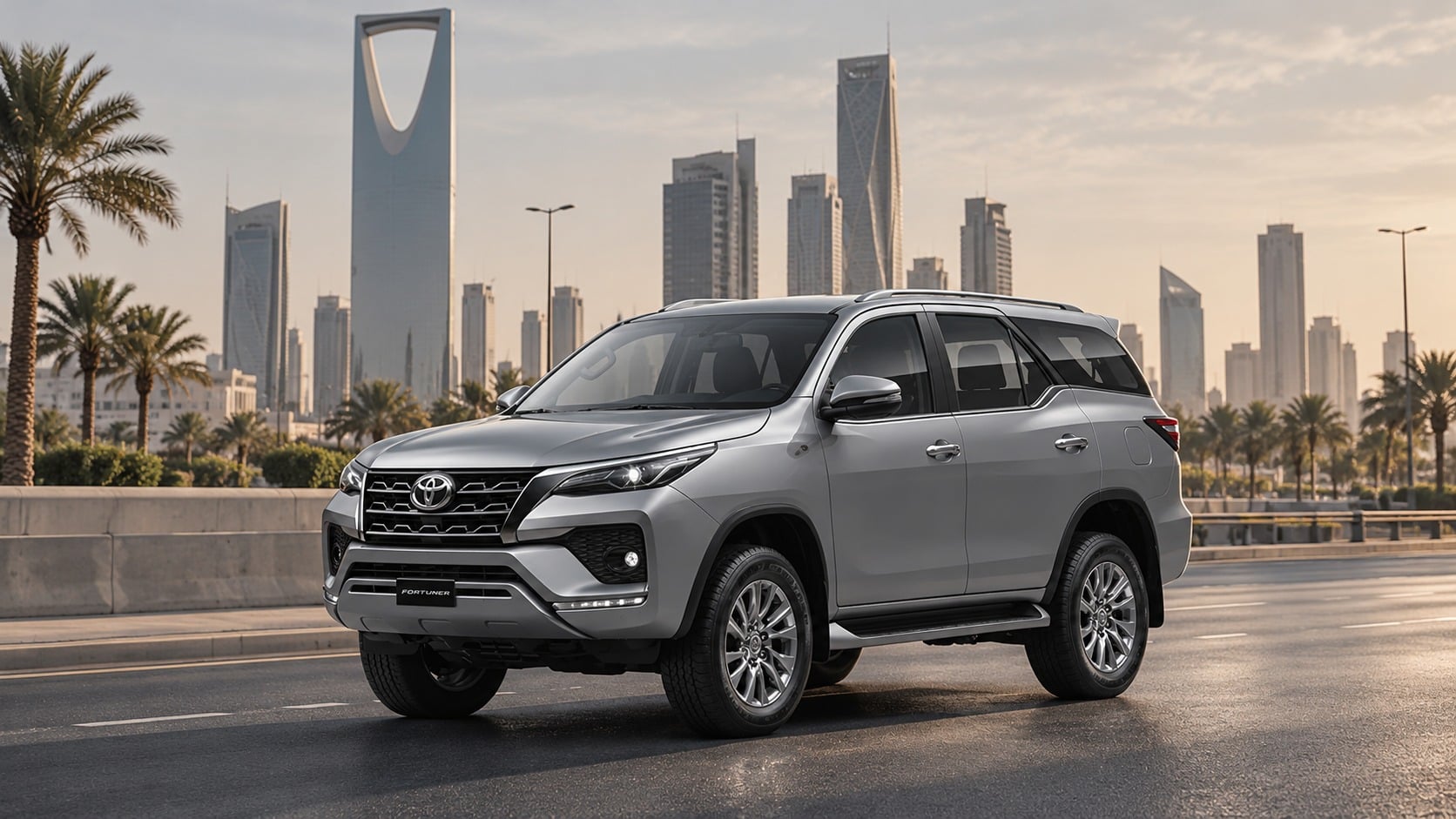
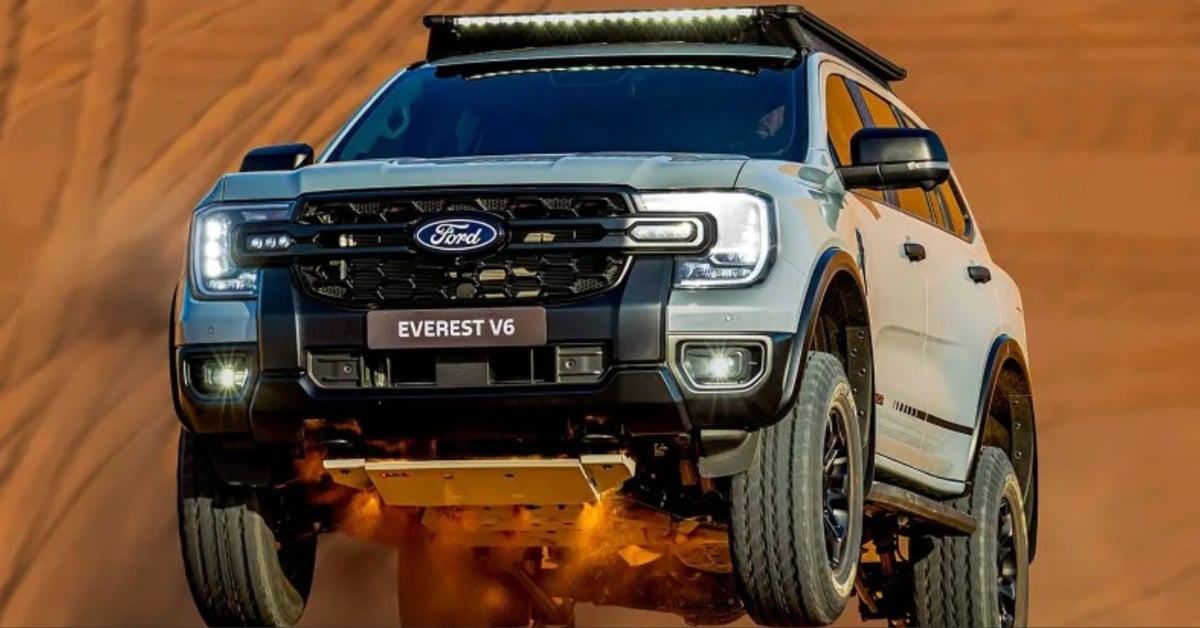
Off-Road Verdict: The Ford Everest comes with more modern off-road technology, including selectable terrain modes and a dedicated Sand Mode take it into the dunes and that feature earns its place. The Toyota Fortuner focuses on proven mechanical capability: a low-range transfer case and a rear differential lock on selected grades. If you've run a Fortuner through the same terrain for years, Everest's electronic approach will feel like a different philosophy entirely. The Fortuner's mechanical rear differential lock is the feature its off-road reputation is built on.
Infotainment and In-Cabin Technology
Interior and Technology Comparison
|
Feature |
Ford Everest |
Toyota Fortuner |
|
Central Touchscreen |
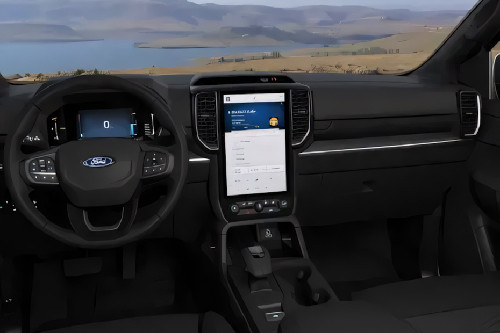
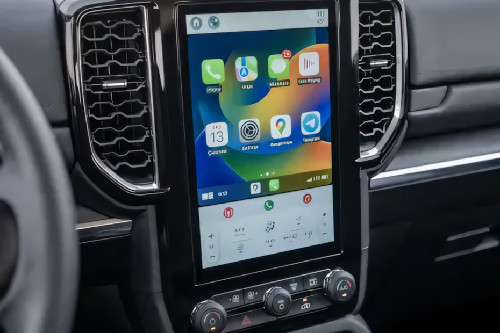
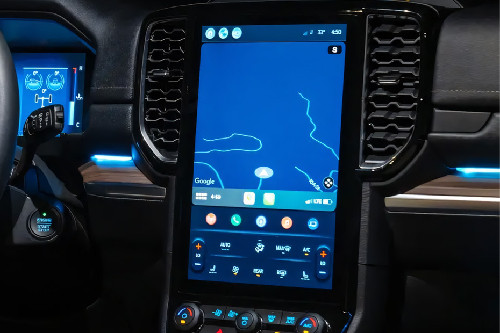
12-inch vertical touchscreen |
8-inch touchscreen |
|
Infotainment System |
Ford SYNC 4 |
Toyota infotainment system |
|
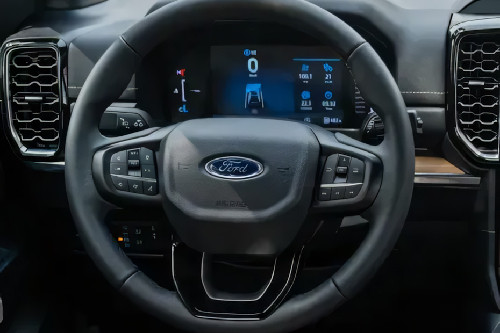
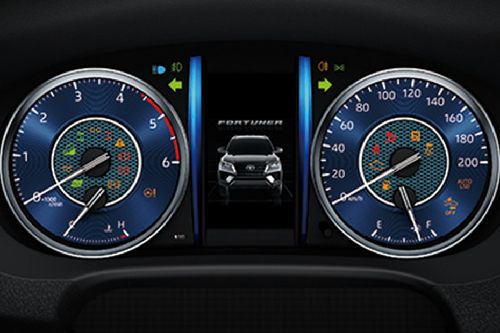
Digital Instrument Cluster |
Up to 12.4 inches |
Conventional instrument cluster |
|
Apple CarPlay |
Supported |
Supported |
|
Android Auto |
Supported |
Not specified |
|
Audio System |
Premium B&O audio system on the Platinum grade |
Standard audio system |
|
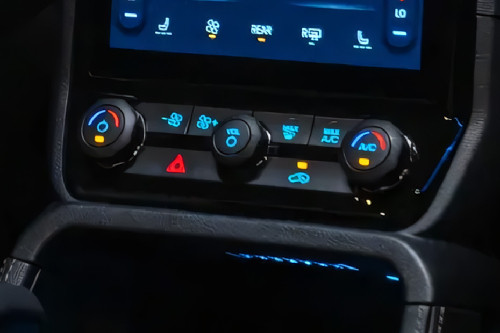
Climate Control |
Automatic climate control |
Automatic climate control |
|
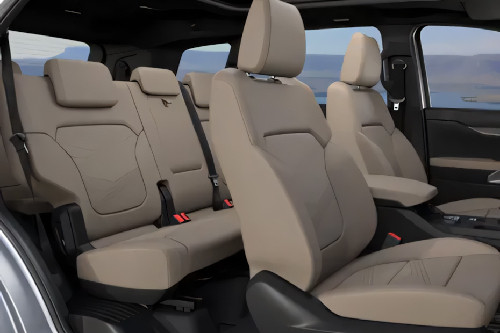
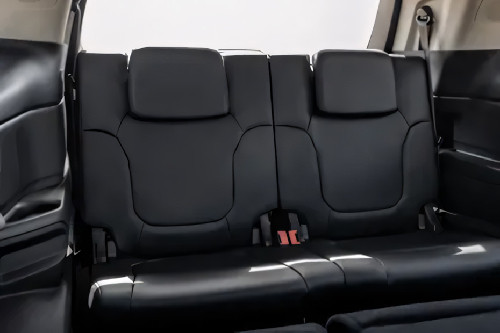
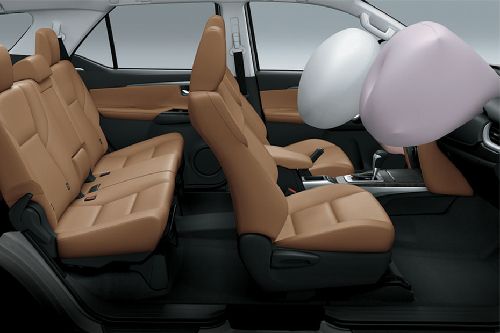
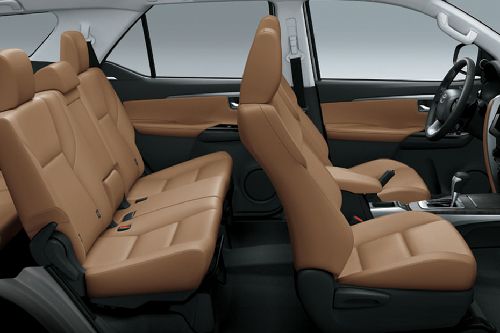
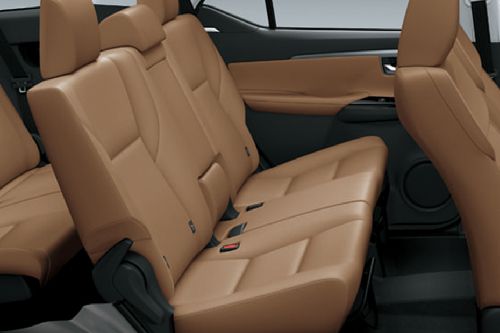
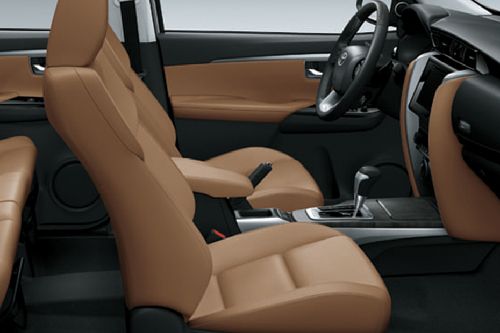
Seat Upholstery |
Depends on variant |
Optional leather seats |
|
Cabin Experience |
Modern, digital and screen-focused |
Traditional and practical |
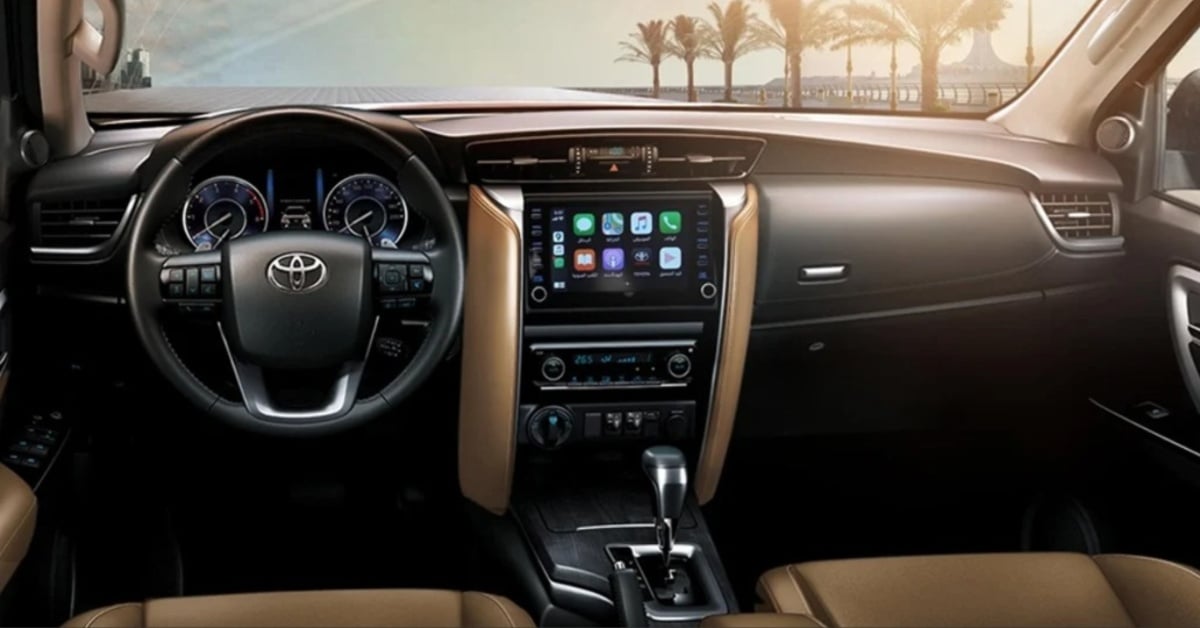
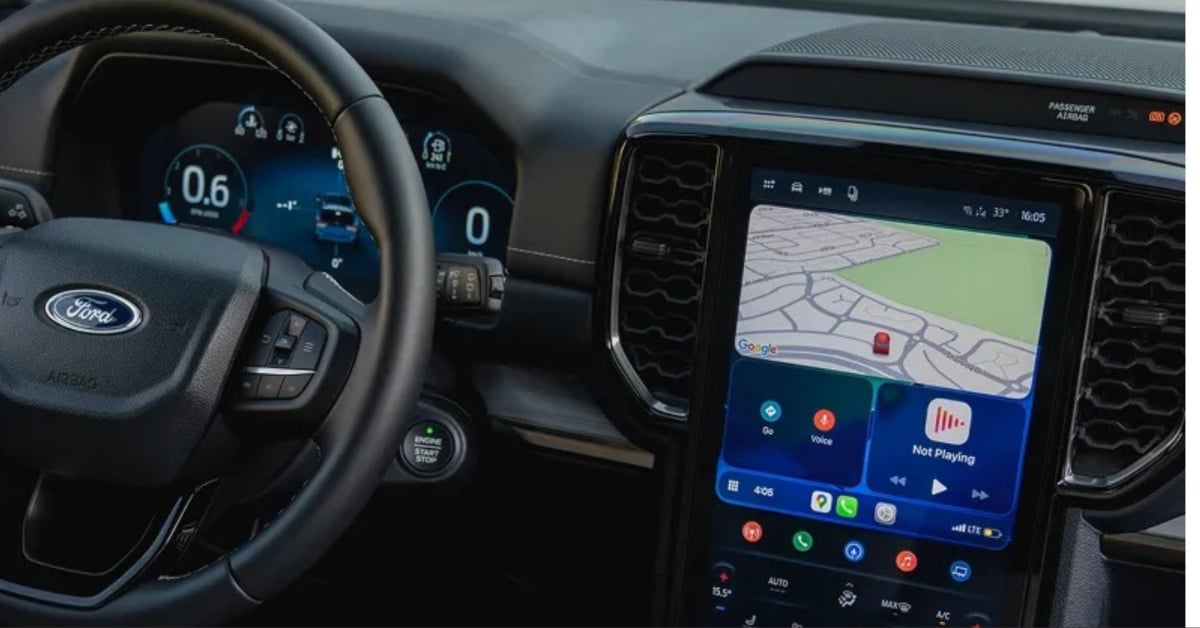
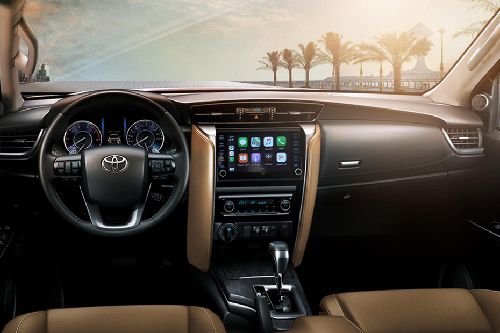
Interior Verdict: The Ford Everest has a more modern cabin a 12-inch vertical touchscreen, a 12.4-inch digital instrument cluster, and a B&O audio system on the Platinum grade. Sit a passenger in the Everest after the Fortuner's 8-inch screen and analogue dials, and the gap in perceived quality is immediate. The Fortuner covers the basics; the Everest's cabin is the stronger argument for its price premium.
Pricing and Entry-Level Equipment
Price and Value for Money Comparison
|
Feature |
Ford Everest |
Toyota Fortuner |
|
Starting Price |
SAR 167,785 |
SAR 128,742.50 |
|
Price Difference |
Around SAR 39,043 more |
More affordable entry price |
|
Market Position |
Premium seven-seat SUV |
More accessible seven-seat SUV |
|
Engine Advantage |
More powerful base engine |
Multiple engine options |
|
Infotainment |
Larger standard touchscreen |
Smaller touchscreen |
|
Resale Value |
Competitive |
Strong resale value |
|
Dealer Support |
Ford dealer network in Saudi Arabia |
Toyota has an extensive dealer network across Saudi Arabia. |
|
Overall Value |
More performance and technology |
Practical ownership and lower entry cost |
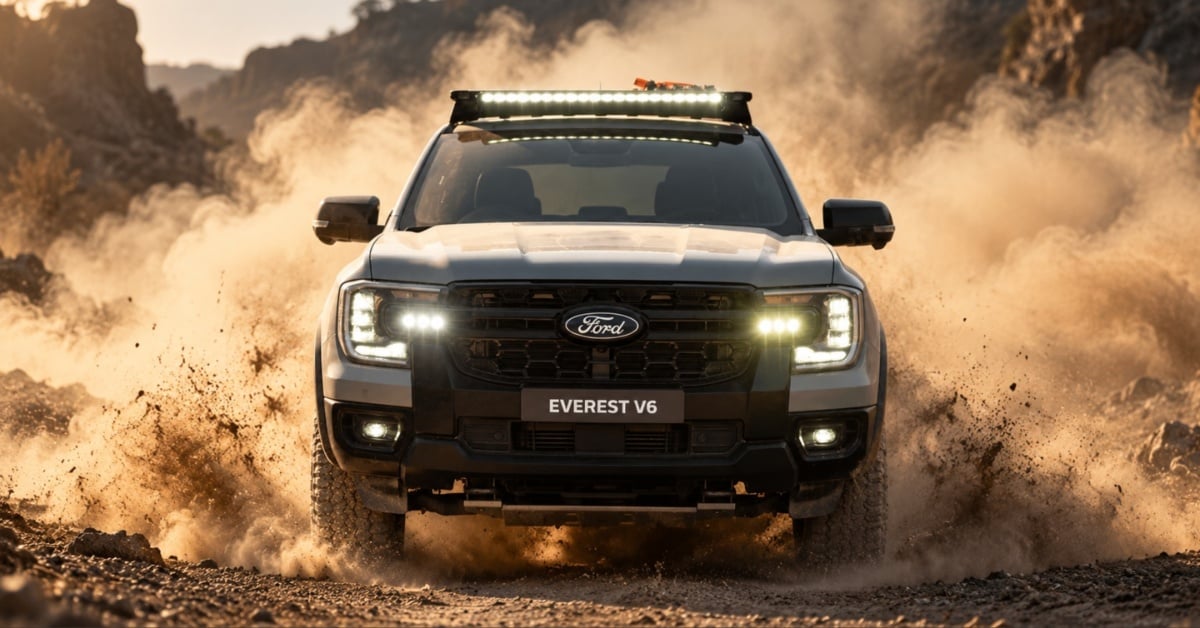
Price Verdict: The Toyota Fortuner starts at SAR 128,742.50 — that's a SAR 39,043 gap to the Everest's opening price, and if you factor in Toyota's stronger resale value and wider dealer network, the Fortuner's total ownership case is harder to dismiss than the sticker alone suggests. At roughly SAR 39,043 more, the Everest brings 310 hp and a 12-inch touchscreen. Whether those extras justify the premium depends on how much weight a buyer puts on resale value and dealer support versus outright performance.
Final Verdict: Which SUV Should You Buy?

Ford Everest – Best for Performance and Technology
- Engine output is higher, with stronger overall performance.
- Inside, a large touchscreen and digital instrument cluster are standard.
- Advanced electronic off-road features include selectable terrain modes.
- It suits buyers after modern technology, comfort and performance.
Toyota Fortuner – Best for Value and Practicality
- Its starting price is lower than the outgoing model's.
- Petrol and diesel engine options are both available.
- Traditional off-road capability comes from a proven 4WD system.
- Toyota's reputation for durability, resale value and aftersales support is well established in Saudi Arabia.
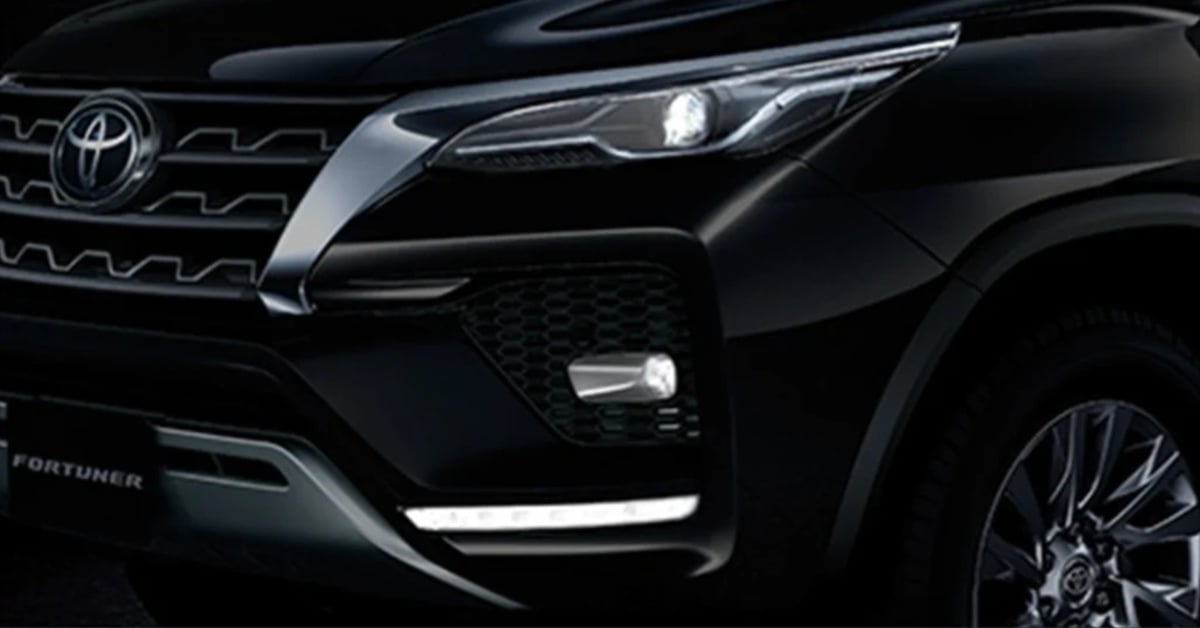
Overall Verdict:
The Ford Everest is the stronger pick for buyers willing to pay extra for performance, technology and modern features. The Toyota Fortuner suits those who put affordability, reliability and long-term ownership costs first. At its lower price, it covers the basics well. Whether Everest's extra kit justifies the gap is the only real question.
Also Read: Land Cruiser FJ vs Jetour T2: Which SUV Is Better for Saudi Arabia?

-
Explore Ford EVEREST
-
-
Explore Toyota Fortuner
-





Ford Car Models
-
Ford Territory -
Ford Taurus -
Ford EVEREST -
Ford Mustang -
Ford Bronco -
Ford Ranger -
Ford F 150 -
Ford Ranger Raptor -
Ford Mustang Mach-E -
Ford Expedition
Don't Miss
-
Toyota Fortuner vs Nissan X-Terra: Which SAR 128,742 seven-seater SUV offers better value?
-
Ford Everest and Toyota Fortuner: The Ultimate Saudi SUV Showdown
-
Ford Territory Variants Explained in Saudi Arabia: Ambiente vs Trend vs Titanium vs Platinum
-
Nissan X-Trail vs Ford Territory 2027 in Saudi Arabia: Which SUV Offers More?
-
Toyota Fortuner vs Toyota Prado 2026 in Saudi Arabia: Price, Specs and Features Compared
Automotive News and Reviews
- Latest
- Popular
-

-
-
-
Comparison: Kia Carens vs Toyota VelozTeam SayaraBay, Sep 09, 2025
-
Comparison: Ford Territory vs Toyota RAV4Team SayaraBay, Sep 08, 2025
-
-
-
-



You might also be interested in
- News
- Featured Stories
-
Comparison: Kia Carens vs Toyota VelozTeam SayaraBay, Sep 09, 2025
-
Comparison: Ford Territory vs Toyota RAV4Team SayaraBay, Sep 08, 2025
-
-
-
-

Featured Car
- Upcoming
- Popular
-
 Ford TerritorySAR 103,900 - 133,900 Price in RiyadhExpected Launch Dec, 2026 Alert Me When Launched
-
-
-
-
Ford MustangPrice coming soon
-
Ford BroncoPrice coming soon
-
Ford RangerPrice coming soon
Compare & Recommended
|
|
|
|
|
|
Transmission Type
Automatic
|
Automatic
|
Automatic
|
-
|
Automatic
|
|
Engine Displacement
1998
|
2398
|
2498
|
-
|
1798
|
|
Power
170Hp
|
147Hp@3400rpm
|
240hp
|
-
|
190Hp
|
|
Torque
405Nm
|
400Nm@1600-2000rpm
|
-
|
-
|
320Nm
|
|
|
Trending SUV
- Latest
- Upcoming
- Popular
.jpg "Mercedes-Benz GLB-Class 2027")
.jpg "Mercedes-Benz GLB Electric")