Chinese Brands Growing While Market Falls in August
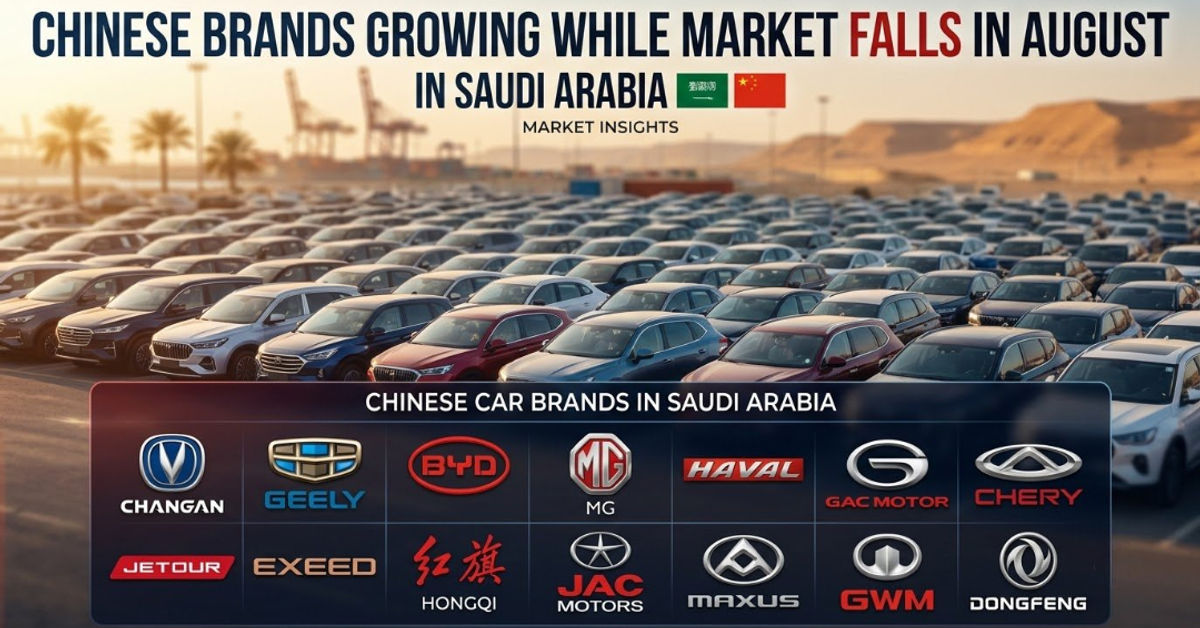
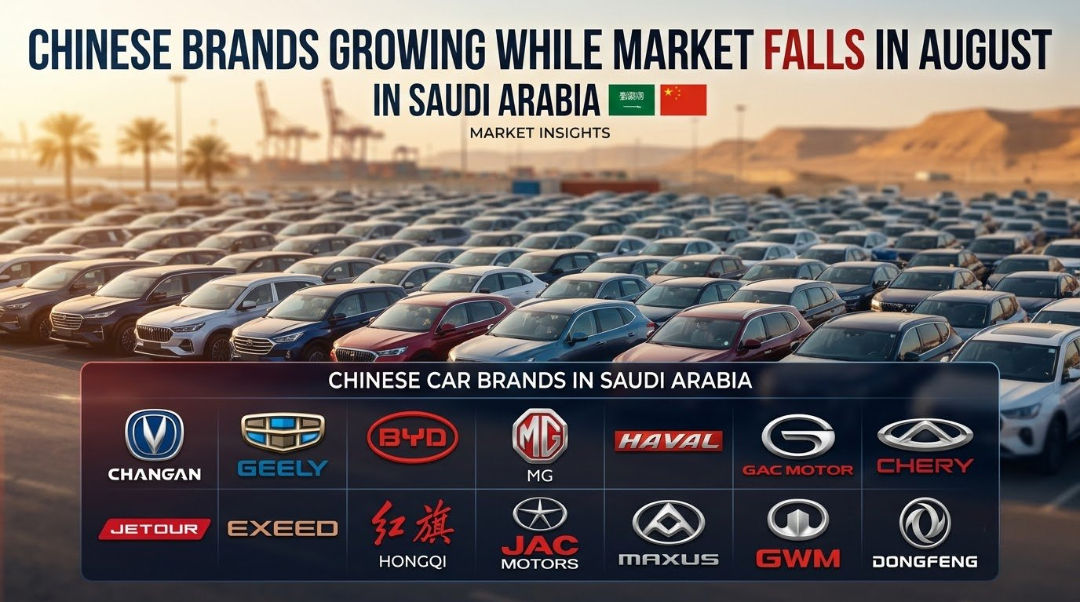
Saudi Arabia: The rapid expansion of Chinese brands in the Kingdom’s market has been evident over the last few years. From being on the fringe to gradual growth and now becoming mainstream, this is the real story of the Saudi market. This is now starting to show in monthly and yearly new-car sales.
KEY TAKEAWAYS
What makes Chinese brands gain while Japanese and Korean brands decline?
Among several reasons, modern technology, stylish design, and a strong features-to-price ratio are the main reasons.What does Chinese brand growth indicate about the long-term market?
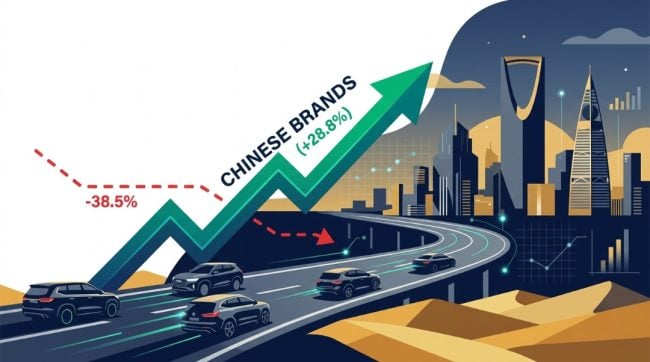
There is a structural shift in buyer preferences, and it will be difficult for Chinese brands to stop gaining further market share.The month of August was no different, as most Chinese automotive brands were among the few consistent growth stories in Saudi Arabia’s contracting market. While the overall market declined 38.5 percent year-over-year, Haval gained 28.8 percent, MG gained 17 percent, and Jetour gained 12.3 percent. These are not marginal gains.
Combined, these brands represent market-share gains during an industry-wide decline. This growing sales pattern points towards changes in the way buyers are now approaching brands, especially during economic uncertainty.
Clearly, like the rest of the world, the growth of Chinese brands in Saudi Arabia is a big moment. This is even more significant during a shrinking market. Saudi car buyers are increasingly considering Chinese options alongside traditional Japanese and Korean brands, with Chinese products having narrowed the gap in many areas.
Growth in a Falling Market
|
Brand |
August Change |
Market Position |
Strategy |
|
28.8% |
Top 10 |
Gaining share |
|
|
17% |
Top 10 |
Building presence |
|
|
12.3% |
Top 10 |
Expanding portfolio |
|
|
Overall Market |
-38.5% |
Contracting |
Shrinking |
|
Traditional Brands |
-15 to -70% |
Declining |
Losing position |
Chinese brands are standing out while much of the market declines. This performance gap indicates that they are gaining ground during a difficult market period.
Chinese Brand Portfolio in August:
- Haval: +28.8% (strong SUV presence)
- MG: +17% (value-focused portfolio)
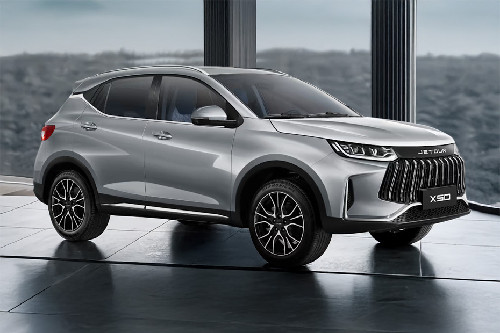
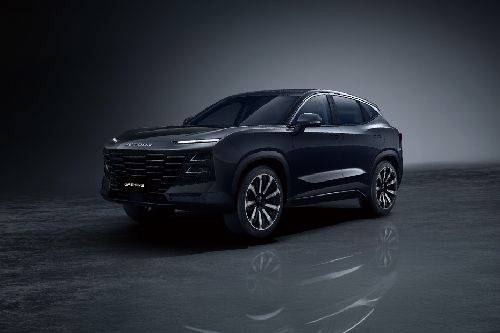
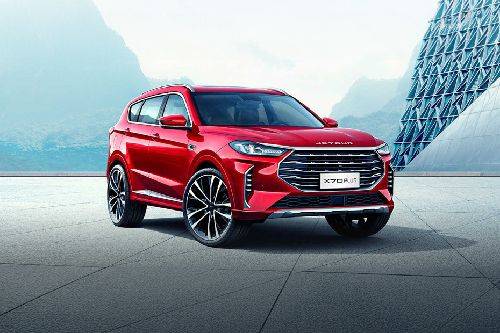
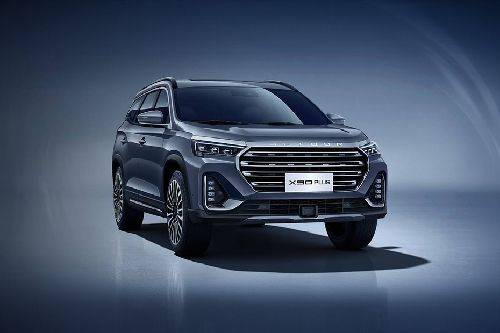
- Jetour: +12.3% (SUV/family vehicle focus)
- All three brands gained despite an overall 38.5% market decline

Launch Effects of the Haval H9 and Jetour G700
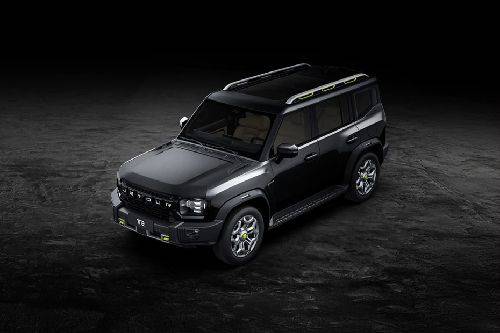
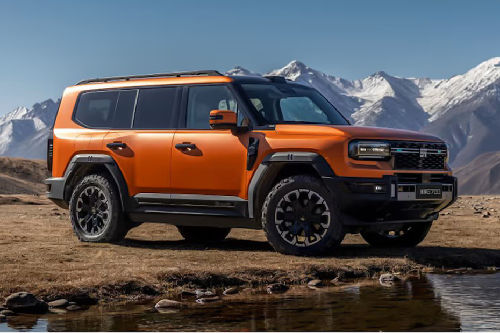
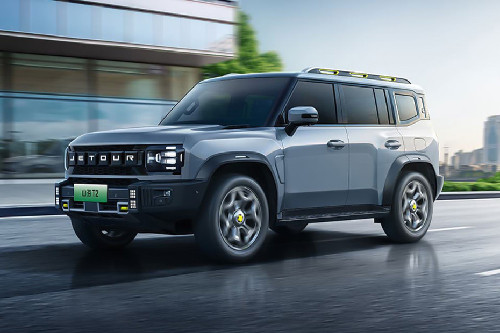
The Haval H9 jumped to ninth place with a 44.1% increase. The Jetour G700 entered the ranking at 44th position. These new or relatively recent models are capturing buyer attention. This indicates that product innovation is becoming an important strength for Chinese brands, while some established brands continue to rely on older designs and fewer features.
The Haval H9’s move into the top 10 clearly underlines that Chinese brands are gaining a foothold in higher-priced SUV segments. For years, Chinese brands were largely considered good options at the budget level. But that is no longer the case, and the H9’s performance suggests this is changing. Chinese brands are moving upmarket while maintaining strong choices for budget-conscious buyers.
Furthermore, another advantage is an extensive portfolio, which gives buyers a wider choice. Chinese brands offer products across multiple price points. This is not always the case with conventional brands, many of which remain focused on specific segments. This can make them more vulnerable when buyers shift their price preferences.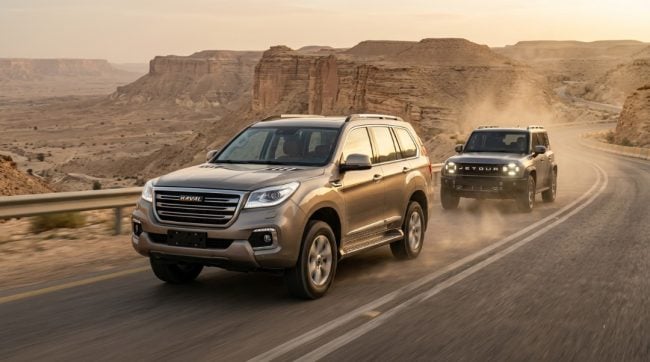
The Jetour G700’s arrival at a mid-range position is one such example. It underlines that Chinese brands are now being seriously considered by buyers evaluating alternatives. Saudi buyers are not simply turning to Chinese brands; they are actively comparing and selecting Chinese options.
Dealer Network and Market Access
Another key area for Chinese brands is their ability to grow despite having less-established dealer networks. Haval, MG, and Jetour do not have the dealer density of Toyota or Hyundai, yet they continue to gain market share.
- Current dealer performance is strong.
- Direct-to-buyer sales are becoming increasingly important.
- Strong demand is helping address limited network presence.
- Their sales growth shows that a smaller network does not necessarily prevent market expansion.
That means Chinese brands are getting this growth despite some distribution limitations. If their dealer networks keep expanding, that could be an even bigger opportunity. The potential for further share gains during a market recovery is substantial. Chinese brands are building their positions despite having a more limited distribution network.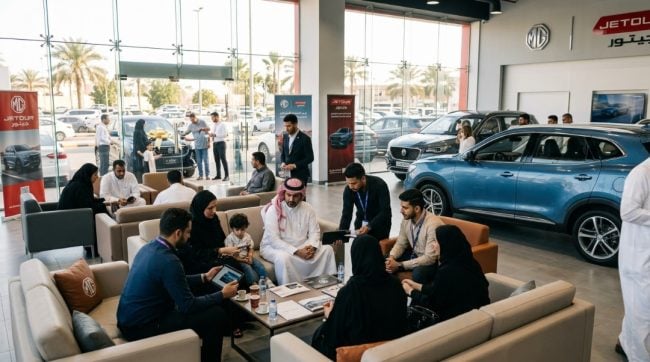
Threat to Traditional Brands
August data shows that Chinese brands are establishing a stronger presence during a period of weakness for many traditional brands. This timing is significant, as customers are seeking alternative options and some are switching brands. When the market recovers, customers may stay with the new brands they have adopted if they are satisfied with their ownership experience.
Interestingly, traditional brands face a dual challenge: current-period share loss and the potential for permanent share loss if the recovery does not restore buyer preference. Established Japanese and Korean brands may not be able to recover lost customers through improved pricing or economic conditions alone. Often, recovery will require greater efforts to convince buyers to return to brands they may have overlooked during the downturn.
Chinese brands are well-positioned to benefit from this dynamic and capture further market share during vulnerable periods through strategic positioning.
What August Means to Buyers
The growth of Chinese brands means that buyers now have good alternatives to traditional brands. Perceptions of quality and reliability are improving, and dealer support networks are expanding as well. Resale value uncertainty remains the primary concern.
So, buyers considering Chinese brands still need to be careful with their purchasing decisions. You should look closely at warranty coverage, dealer support availability in your region, documented reliability records, and resale value. Most Chinese brands have an advantage in terms of price and features, but what also matters is the total ownership experience and after-sales service.
For cost-conscious buyers, Chinese brands offer compelling value during this market period. Pricing is aggressive, and features are comprehensive. Traditional brand premiums can be difficult to justify when the perceived quality gap has narrowed.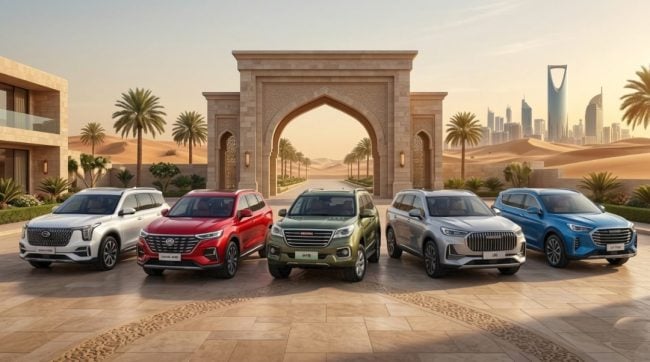
The Last Word
The growth of the Chinese brands during the falling market is a huge deal. This is a fundamental shift, with buyers making a huge transition towards new brands. Not good news for traditional brands, August data signals a challenge.
For the Saudi market, Chinese brands are becoming a real choice, and their ability to grow during tough times indicates a maturing market where buyers are demanding more than ever.
Saudi new-car buyers are no longer automatically choosing established brands. This shift benefits competitive market dynamics and gives buyers more choice. What is clear, though, is that Chinese brands are now firmly established in Saudi Arabia’s automotive landscape.
Also Read: New 2027 Jetour T2: Major Exterior, Interior and Feature Changes Explained

Jetour Car Models
-
Jetour T2 -
Jetour T1 -
Jetour X70 -
Jetour X50 -
Jetour Dashing -
Jetour X70 Plus -
Jetour X90 Plus -
Jetour G700
Automotive News and Reviews
- Latest
- Popular
-

-
-
-
Comparison: Kia Carens vs Toyota VelozTeam SayaraBay, Sep 09, 2025
-
Comparison: Ford Territory vs Toyota RAV4Team SayaraBay, Sep 08, 2025
-
-
-
-

You might also be interested in
- News
- Featured Stories
-
Comparison: Kia Carens vs Toyota VelozTeam SayaraBay, Sep 09, 2025
-
Comparison: Ford Territory vs Toyota RAV4Team SayaraBay, Sep 08, 2025
-
-
-
-

Featured Car
- Latest
- Upcoming
- Popular
Latest Jetour Car Videos on SayaraBay

-
 Dashing – Power Meets Comfort27 Aug, 2025 .
 -
X50 – Where Fun Meets Tech27 Aug, 2025 .
-
X70 Plus – Safe. Smart. Sophisticated27 Aug, 2025 .