EV Battery Life Secrets: How Chemistry and Charging Habits Shape Your Electric Car's Future
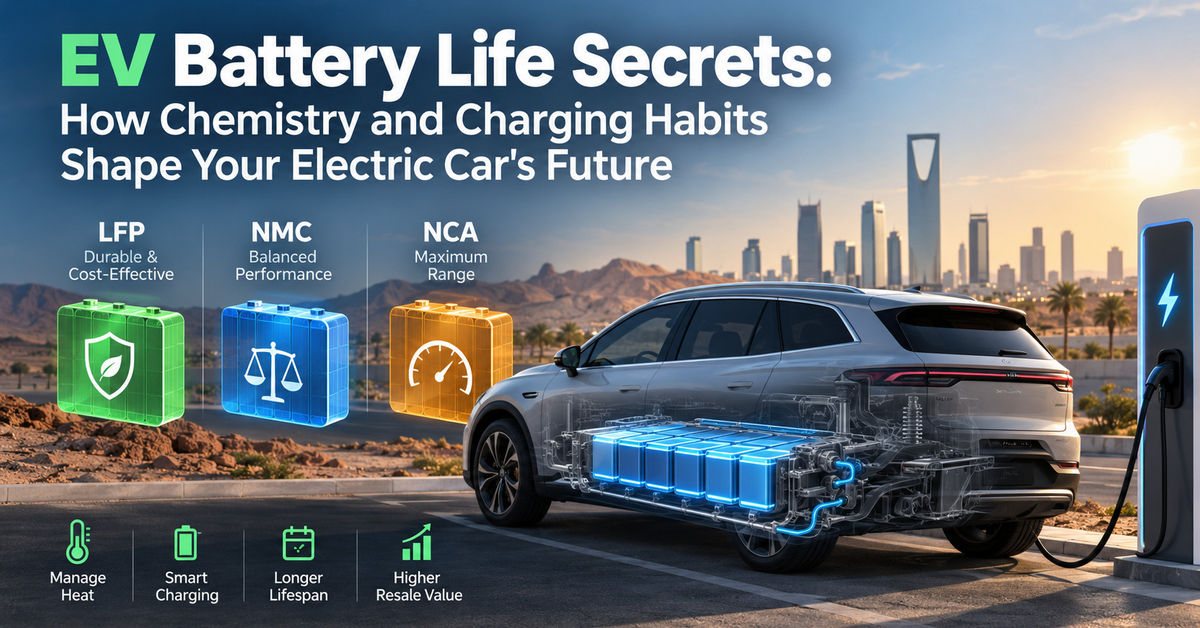
An EV's battery chemistry sets the stage for range and cost, but real-world lifespan is decided by charging habits and heat management.
KEY TAKEAWAYS
What are the main EV battery chemistries?
The three main types are LFP, NMC and NCA. LFP prioritises durability and cost, while NMC and NCA offer higher energy density and range.How can I extend my EV battery life in Saudi Arabia?
Avoid extreme heat, prolonged 100% charging and excessive DC fast charging. Use active cooling and maintain an appropriate charge level.The technical specifications of an electric vehicle often focus on range and charging speed, but the battery chemistry underneath determines more than just the numbers on a brochure.
For owners in Saudi Arabia, understanding the differences between the three dominant battery types, Lithium Iron Phosphate (LFP), NMC (Nickel Manganese Cobalt) and NCA (Nickel Cobalt Aluminum), is the first step. The second, more critical step, is managing the battery correctly. How an EV is charged, parked and cooled has a greater impact on its long-term health and resale value than the elements inside its cells.
Quick read:
- Lithium Iron Phosphate (LFP) batteries are durable and cost-effective but offer lower energy density, resulting in less range for the same weight.
- Nickel Manganese Cobalt (NMC) and Nickel Cobalt Aluminum (NCA) chemistries provide superior range but require more careful charge management to maximise their lifespan.
- Battery health depends more on avoiding extreme heat and prolonged high states of charge than on the specific chemistry used.
- In the Kingdom's climate, active battery cooling and smart charging practices are essential for preserving an EV's range and resale value.
The Three Chemistries
The core trade-off in battery design is between energy density, which dictates range and competing factors like thermal stability, cost and lifespan.
Electric vehicle batteries are not a single technology. The choice of chemistry creates a distinct personality for the car.
- LFP (Lithium Iron Phosphate) is the durable, budget-friendly option, built without expensive nickel or cobalt.
- NMC (Nickel Manganese Cobalt) is the industry's common middle ground, balancing performance and cost.
- NCA (Nickel Cobalt Aluminum) pushes for maximum energy density, prioritising range and performance above all else.
This hierarchy is clear: NCA packs the most energy per kilogram, followed by NMC, with LFP being the densest. The cost is inverted. LFP is the cheapest to produce, while NCA is the most expensive.
LFP: Budget and Durability
LFP offers excellent durability and a lower risk of thermal runaway, making it a safe and long-lasting choice.
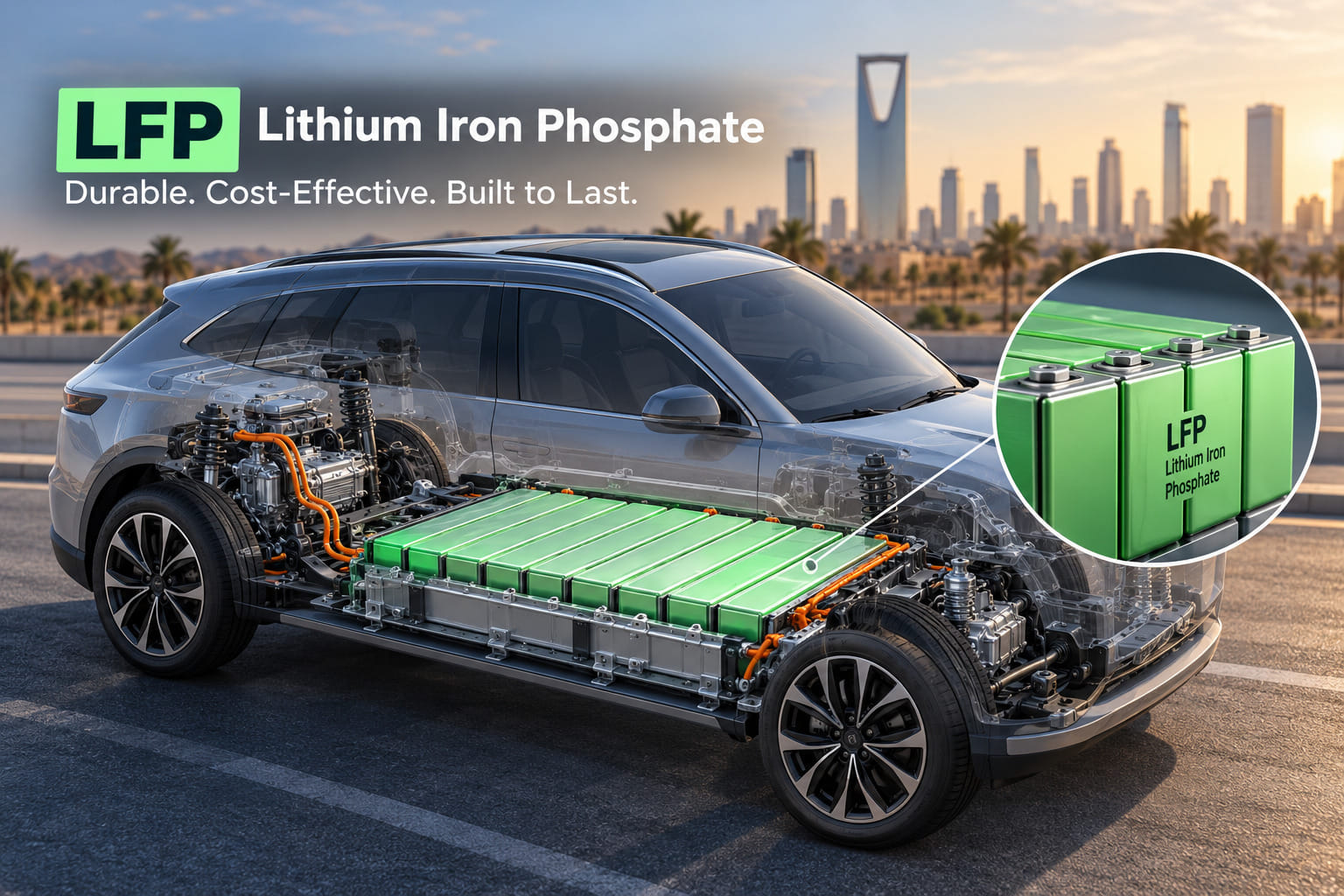
The case for LFP is built on resilience. Its chemistry is inherently more stable, reducing the risk of overheating. This stability translates into a longer cycle life, often rated for 8,000 to 10,000 charge cycles under ideal conditions.
Chinese brands entering the Kingdom have leaned heavily on LFP to hit competitive price points. The compromise is energy density. An LFP pack is heavier than an NMC or NCA pack for the same given range. This means it's better suited for standard-range models where cost and longevity are the priority.
LFP batteries can also be regularly charged to 100% without significant degradation, a key difference from other chemistries. In fact, a full charge is needed periodically to help the Battery Management System (BMS) accurately calibrate its range estimate due to LFP's flat voltage curve.
NMC and NCA: Range vs. Longevity
NMC and NCA battery packs deliver an excellent range-to-weight ratio, but this performance comes with a need for more disciplined management.
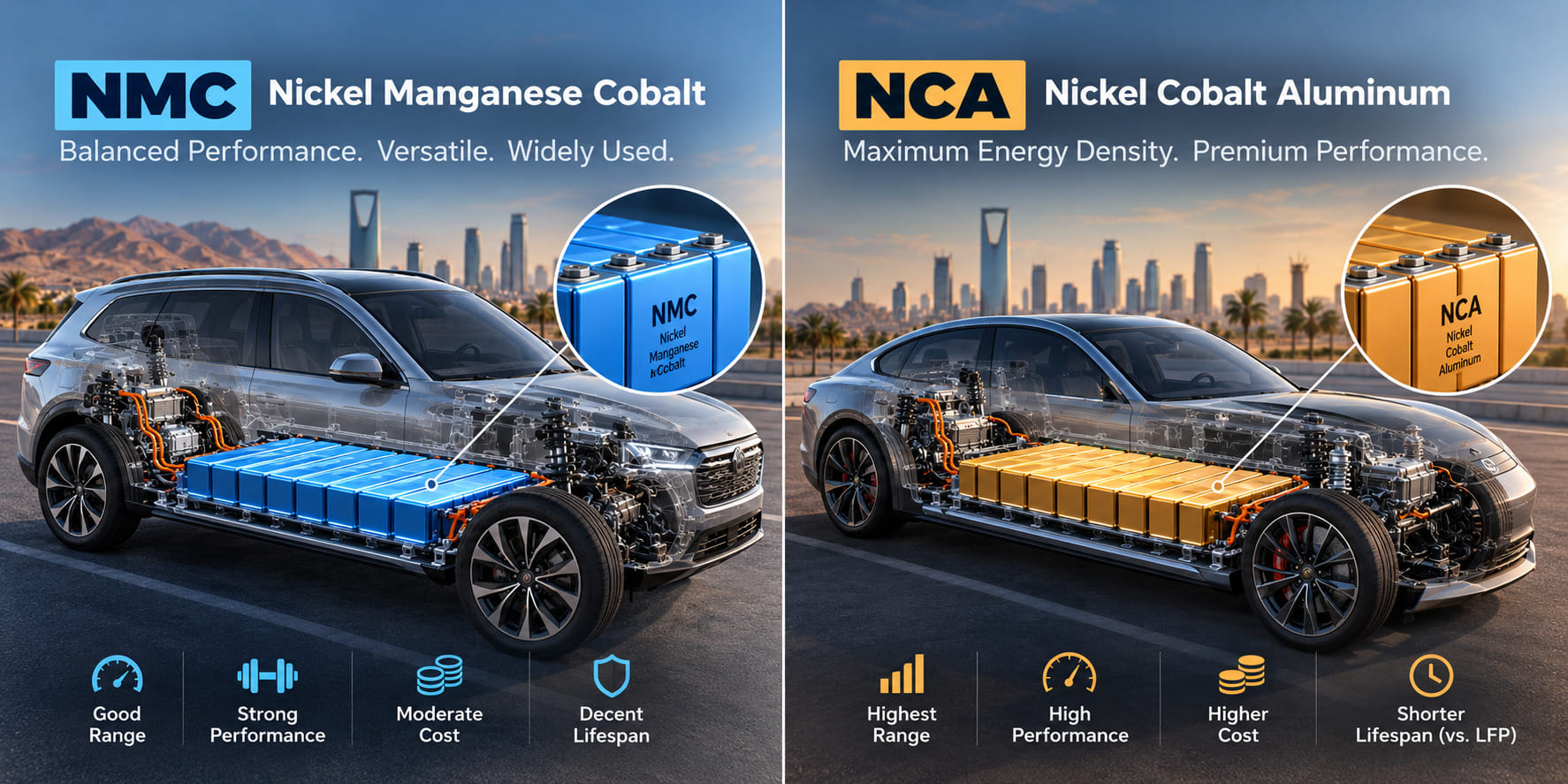
For long-range and high-performance EVs, NMC and NCA are the default choices. NMC is the most widespread chemistry, offering a good balance of energy density for range, decent power output and a respectable lifespan of 3,000 to 5,000 cycles. NCA battery takes this further, providing the highest energy density available today, making it ideal for premium saloons and SUVs where maximising driving distance is a key selling point.
But this performance comes with trade-offs. NCA batteries have a shorter rated cycle life, typically 2,000 to 3,000 cycles and are more sensitive to high temperatures and high states of charge.
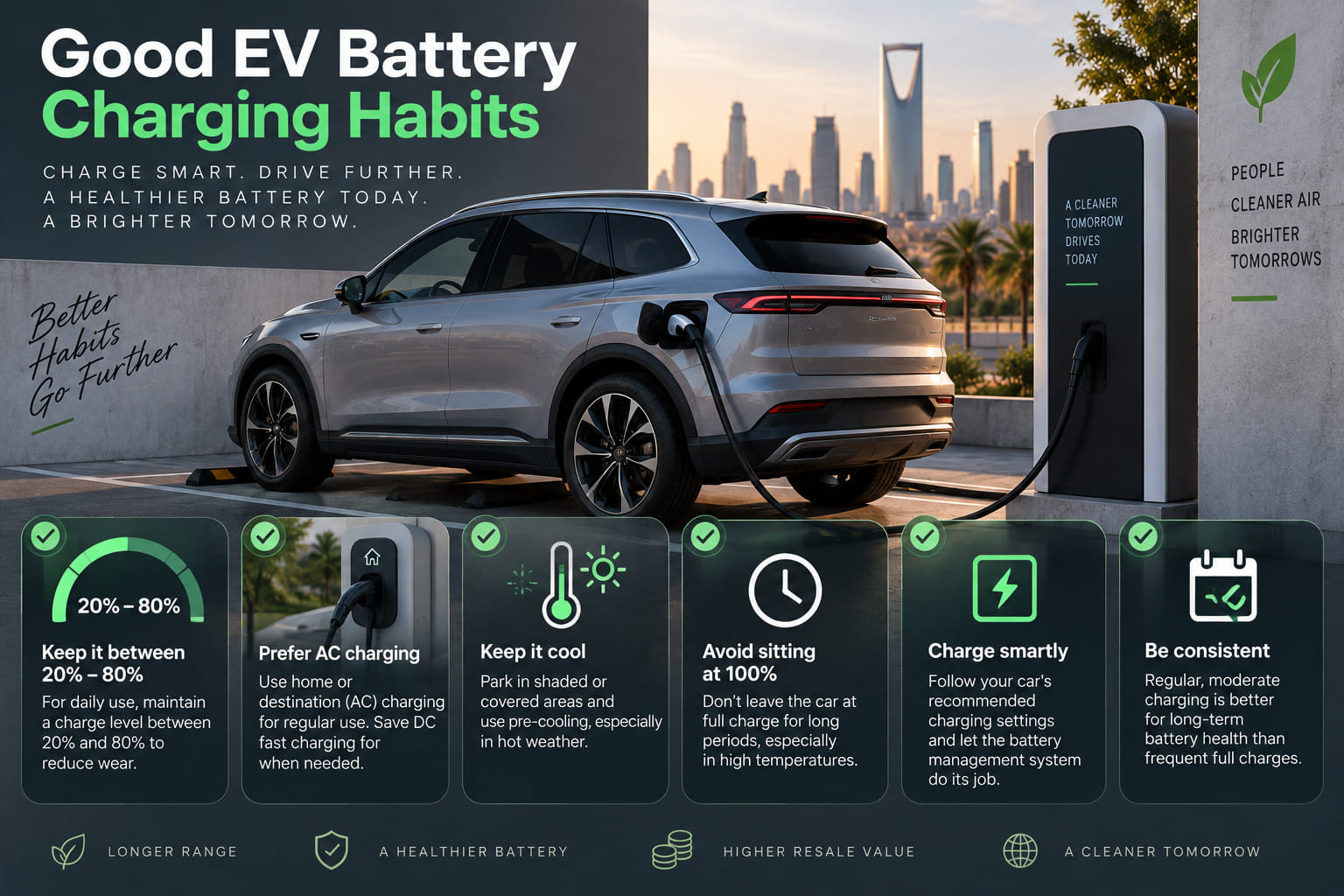
For both NMC and NCA packs, the best practice for daily use is to maintain a state of charge between 20% and 80% to minimise long-term degradation.
Management Beats Chemistry
Heat is the most critical factor affecting battery longevity, more so than the specific chemistry inside the pack.
The debate over which chemistry is "best" is secondary to a more important truth: battery management practices are the primary driver of longevity. Poor management can halve a battery's useful life, regardless of its composition.
The main enemies are heat, time spent at a high state of charge and the physical stress of repeated DC fast charging. Keeping the battery pack within its optimal temperature range (around 15-35°C) is paramount.
Parking an EV with a 100% charge for extended periods, especially in the heat, accelerates degradation. While DC fast charging is convenient, relying on it exclusively creates more thermal and electrochemical stress than slower AC charging. Calendar ageing is unavoidable, but these other factors are well within an owner's control.
Heat, Range and Resale
Extreme ambient temperatures, like those seen in a Saudi summer, directly accelerate battery degradation, making active cooling and smart charging vital.
For EV owners in the Kingdom, this isn't just theory. Summer temperatures regularly exceeding 50°C put immense stress on battery packs. An EV's liquid-cooling system is not an option here, it's a necessity. The long distances between major cities also place a premium on range, making the higher energy density of NMC and NCA batteries attractive.
However, this must be balanced against the need for careful thermal management. A practical tip for owners is to pre-cool the cabin while the vehicle is still plugged in. This uses grid power to run the air conditioning, which in turn helps cool the battery pack before driving, reducing thermal stress. As the used EV market develops, battery health certification will become a critical part of determining resale value. A vehicle with a documented history of smart charging and care will command a higher price.
The spec sheet sells the car once. Good habits protect the investment for years.

Automotive News and Reviews
- Latest
- Popular
-

-
-
-
Comparison: Kia Carens vs Toyota VelozTeam SayaraBay, Sep 09, 2025
-
Comparison: Ford Territory vs Toyota RAV4Team SayaraBay, Sep 08, 2025
-
-
-
-


You might also be interested in
- News
- Featured Stories
-
Comparison: Kia Carens vs Toyota VelozTeam SayaraBay, Sep 09, 2025
-
Comparison: Ford Territory vs Toyota RAV4Team SayaraBay, Sep 08, 2025
-
-
-
-
Featured Car
- Latest
- Upcoming
- Popular

.jpg "Mercedes-Benz GLB-Class 2027")
.jpg "Mercedes-Benz GLB Electric")


Latest Car Videos on SayaraBay

-
 Toyota GR 8611 Jul, 2026 .
 -
Toyota Urban Cruiser10 Jul, 2026 .
-
Toyota Landcrusier10 Jul, 2026 .
-
Toyota Veloz10 Jul, 2026 .
-
Toyota Rav410 Jul, 2026 .
-
Toyota Rav410 Jul, 2026 .
-
Voyah Free10 Jul, 2026 .
-
Tasman: Into a New Dimension04 Oct, 2025 .
-
The New Ford Territory | Your Perfect Getaway Car01 Oct, 2025 .
-
Ready for Your Next Journey23 Sep, 2025 .